
I used to open a new AI chat the same way most people do. Type a prompt. Hit generate. Wait for the result. Then immediately start adjusting colors, fonts, or layout because the output looked almost right. That habit cost me time and diluted the work.
The shift came when I stopped treating the first AI result as a draft and started treating it as raw material. Clarity first. Beauty second. That order changed how I research, write, direct images, and build content systems. It is the core of every AI creative workflow I use now.
This is not a prompt library. It is a working method for designers, strategists, writers, and independent creators who need AI output to survive brand review, client feedback, or public publishing. The method is simple enough to use every day and strict enough to protect the quality of the final work.
Why the First Result Is Rarely Ready
AI is fast at producing volume. It is slower at producing decisions. When I generate a brand content system, a visual concept, or a long-form draft, the first output usually contains three recurring problems.
First, it sounds finished even when the strategy is unfinished. The language has the rhythm of professional writing. The structure looks complete. Yet the underlying point is often vague or misaligned with the actual brief.
Second, it defaults to generic visual or verbal patterns that feel safe but lack specificity. These patterns are drawn from the average of millions of examples. They rarely carry the particular texture of a real brand, a real audience, or a real place.
Third, it mixes useful structure with filler that looks professional until you test it against a real brief. The filler is often the hardest part to detect because it is fluent. It only becomes obvious when you ask whether every sentence or every visual element is doing necessary work.
I learned this the hard way while testing AI on a real brand content system for a small consumer client. The first full draft looked polished. Headlines scanned well. The visual direction felt modern. When I checked it against the original brief, half the claims did not match the positioning, and the image style could have belonged to any of five competing brands. The problem was not the model. The problem was that I had moved to beauty before the work was clear.
Clarity means answering a short set of questions before you polish anything:
What is this piece supposed to do?
Who is it for, and what do they already believe?
What must stay true to the brand voice or visual system?
What can be cut without losing the point?
Until those answers are solid, extra generation only multiplies the confusion. More options do not create more clarity. They create more decisions that still need to be made by a human.
A Four-Stage Workflow That Starts After the Prompt
I now run every AI-assisted project through four stages. The stages are simple on purpose. Complexity tends to hide weak judgment. When the process is clear, the quality of the decisions becomes visible.
Stage 1: Capture the Real Brief
Before any prompt, I write a short internal brief in plain language. It is never longer than half a page. It includes the goal, the audience, the non-negotiables, and the constraints. I treat this brief as the source of truth. Every later AI output is measured against it.
If the brief is vague, the AI will fill the gaps with averages. Averages are rarely useful for brand work. A clear brief forces me to decide what matters before the model begins generating. That decision is the first and most important act of direction.
Stage 2: Generate for Structure, Not Finish
I use AI to produce structure and options, not final language or final images. For writing, I ask for outlines, argument maps, or multiple versions of the same section written in different tones. For visuals, I request reference boards or mood descriptions instead of final frames.
The goal at this stage is range, not polish. I keep the outputs that give me useful raw material and discard the rest quickly. Speed here is an advantage only if I am willing to reject most of what appears. Generating more is useful only when it is followed by decisive selection.
Stage 3: Apply Human Direction
This is the longest stage and the one most people skip. I edit for clarity first. I cut anything that does not serve the brief. I rewrite sentences that sound like they were written by a model trained on every brand in the category. I check visual outputs against real references—storefronts, packaging, film stills, magazine spreads—rather than against other AI images.
I also test for brand fit. Does this language sound like the client, or like a generic professional voice? Does the image feel specific to the product and audience, or like expensive wallpaper?
Only after the content is clear do I move to surface decisions: rhythm, hierarchy, color, type, pacing. Surface decisions are easier and more effective when the underlying structure is already sound.
Stage 4: Final Check Against the Original Brief
Before publishing or handing work over, I return to the half-page brief. I ask one question: does this still do the job we defined at the start? If the answer is no, I do not polish further. I go back.
This loop prevents the common pattern where AI output becomes more finished-looking while drifting away from the original intent. The brief is the anchor. Without it, the work drifts.
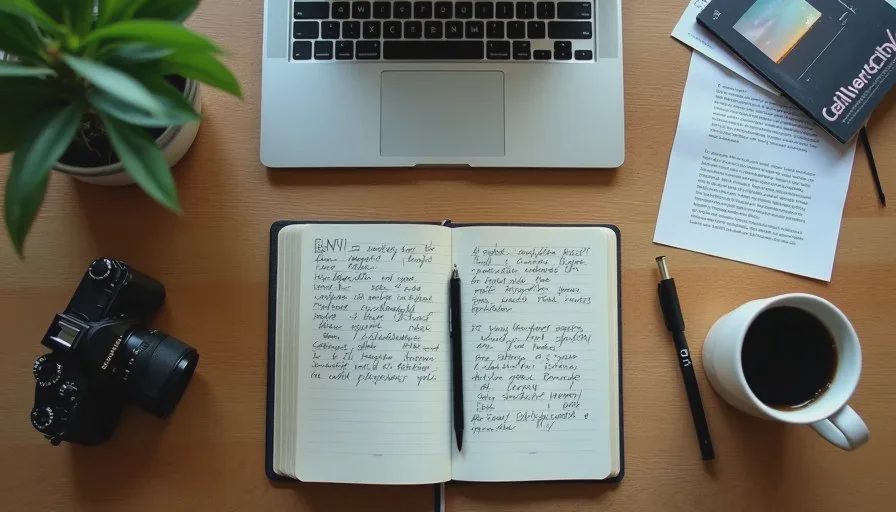
Alt: Creative desk in a Brooklyn apartment with open notebook, film camera, laptop showing AI interface, and printed brand brief under soft morning light
Title: AI creative workflow desk setup with handwritten brief and visual references
What Clarity Looks Like in Practice
Clarity is not the same as simplicity. A clear piece of work can be complex. It simply does not hide its purpose or its decisions.
In writing, clarity often means shorter paragraphs, stronger verbs, and fewer hedging phrases. In visual work, it means fewer competing elements and stronger hierarchy. In brand systems, it means every piece of content can be traced back to the same positioning statement.
I keep a short personal checklist on my desk:
Can I state the main point in one sentence?
Does every section support that point?
Would a smart reader from the target audience understand the next action?
Does the visual direction reinforce the message or compete with it?
If any answer is weak, the work is not ready for beauty. The checklist is deliberately short. Long checklists tend to become performative. A short list forces honest answers.
Common Traps That Waste Time
Several patterns appear repeatedly when people use AI for creative work.
First, treating the prompt as the strategy. A strong prompt can produce better raw material, but it cannot replace judgment about what the work is for. The prompt is a request. The strategy is a decision.
Second, generating more instead of deciding better. Extra versions feel productive. They are often a way to delay the harder work of selection and editing. More options without stronger criteria simply increase the volume of unfinished material.
Third, polishing surface before checking substance. Beautiful type on a confused argument is still a confused argument. Refined color grading on a generic composition is still generic. Surface refinement cannot rescue a weak foundation.
Fourth, measuring success by how “AI-looking” or “not AI-looking” the result appears. The better measure is whether the work is clear, useful, and on-brand. The origin of the pixels or the words matters less than the quality of the final decision.
I have fallen into each of these traps. The recovery is always the same: return to the brief, cut what does not serve it, and only then refine the surface. The process is not glamorous. It is effective.
Building the Habit Into Daily Work
The method only works if it becomes automatic. I now refuse to open an image model or a long writing session until the brief is written. I refuse to spend time on layout until the structure is solid. I keep a running list of rejected outputs so I can see patterns in what the models tend to overproduce.
Over time the process gets faster. The first few projects take longer because the editing muscle is being rebuilt. Later projects move more quickly because the judgment criteria are already clear. The speed comes from better decisions, not from skipping steps.
This approach also changes how I evaluate new tools. I no longer ask only whether a model can generate better images or smoother text. I ask whether it helps me reach clarity faster or whether it simply makes unfinished work look finished sooner. Tools that accelerate clarity are valuable. Tools that only accelerate polish are less useful than they appear.

Alt: Close-up of a film camera held against a Brooklyn storefront with hand-painted signage, used as visual reference for AI image direction
Title: Film camera and Brooklyn storefront used as specific visual reference for AI image generation
Why the Order Matters More Than the Tool
Models will keep improving. Interfaces will keep changing. The gap that remains is the human ability to decide what the work is for and whether the current output serves that purpose.
Make it clear before you make it beautiful is not a slogan about aesthetics. It is a working sequence. Clarity reduces revision cycles, protects brand integrity, and keeps AI in its useful role: a fast generator of options that still require direction.
When the work is clear, beauty becomes easier and more purposeful. When beauty comes first, clarity is often the first thing that gets lost. The order is not a matter of taste. It is a matter of control.
The next time you open a new chat or image session, try writing the brief first. Generate for structure. Edit for decision. Only then refine the surface. The difference shows up in the final result and in the time it takes to get there. The work that begins after the prompt is still the work that determines whether the result is worth publishing.



Travellers Write
No letters yet — be the first traveller to write.